



Products Description
Phenibut Supplement Capsule is a capsule-form product containing Phenibut, a synthetic compound structurally related to gamma-aminobutyric acid (GABA). It is associated with research into the central nervous system and GABA-related signaling, making its chemical properties and biological activity relevant topics in pharmacological research.
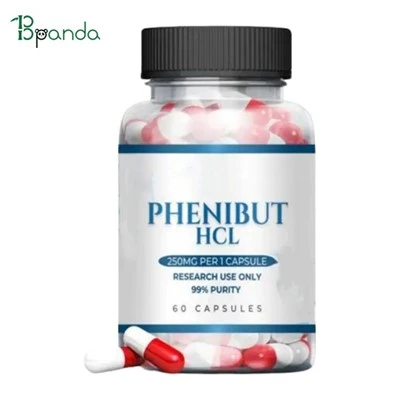
Product Specifications
| Item | Specification |
|---|---|
| Product Name | Phenibut Supplement Capsule |
| Active Ingredient | Phenibut |
| Dosage Form | Capsules |
| Standard Strength | 250 mg/capsule |
| Standard Packaging | 60 capsules/bottle |
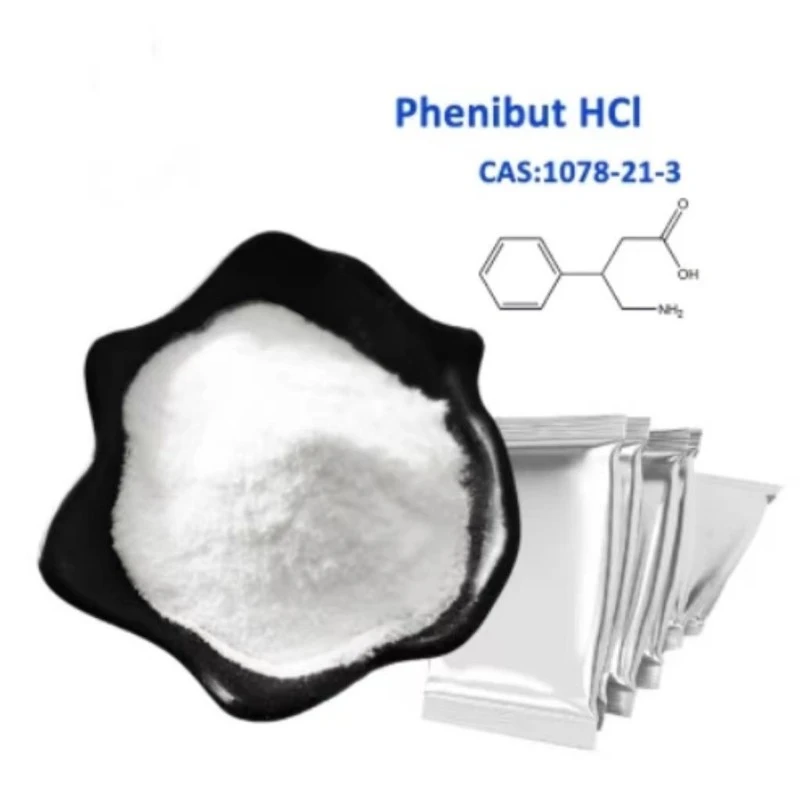
| CAS Number | 1078-21-3 |
| Quality Documentation | Subject to available documentation |
The standard Phenibut capsule specifications are 250 mg per capsule and 60 capsules per bottle. Other strengths and bottle quantities can be discussed based on specific requirements.
Customization Options
1. Capsule Strength and Quantity Customization
Our standard Phenibut capsule specification is 250 mg per capsule, supplied in bottles of 60 capsules. Alternative capsule strengths and bottle quantities can be discussed according to specific requirements, subject to production capabilities and applicable regulatory requirements. Other capsule strengths and quantities per bottle can be discussed according to specific requirements. Customization options are subject to production capabilities and applicable regulatory requirements.
2.Capsule Shell Customization
Three capsule shell options can be considered based on product requirements:
- Gelatin Capsules: Made with gelatin-based capsule shells.
- Vegetarian Capsules: Available with suitable non-gelatin capsule shell materials, subject to confirmation.
- Enteric-Coated Capsules: Designed with an enteric coating. Specific performance characteristics are subject to the actual manufacturing process and validation results.
- Custom Capsule Shell Colors: Custom capsule shell colors can be discussed according to customer requirements. Orders for capsule shell color customization require a minimum quantity of more than 10,000 capsules. Available colors, material compatibility, and lead times are subject to confirmation. This minimum quantity applies specifically to capsule shell color customization and does not represent a universal MOQ for all capsule shell options.
3. Bottle Packaging Customization
Bottle packaging can be customized according to specific requirements. Available options may include:
- Bottle Customization: Bottle shapes, dimensions, and exterior designs can be discussed.
- Desiccant Options: Desiccants can be selected based on packaging and storage requirements.
- Child-Resistant Caps: Child-resistant closure options can be discussed, subject to confirmation of the specific design and applicable requirements.
Final packaging configurations, minimum order quantities, and lead times are subject to confirmation.
4. Private Label Customization
Private label services are available for customers seeking customized branding and product presentation. Options may include brand logos, label design, and product information layout. All label content must accurately reflect the actual product and comply with the regulatory requirements of the target market.

Quality Control
1. Phenibut Raw Material Quality Testing
For Phenibut Supplement Capsule, quality control begins with verifying the identity and chemical form of the Phenibut raw material. We review the available raw material specifications, batch information, and relevant quality documentation to confirm that the material meets the established product requirements. The chemical form must also be considered when calculating and verifying the declared Phenibut content, as different chemical forms should not be treated as equivalent by default.
2. Phenibut Capsule Content and Filling Control
During formulation and capsule filling, quality control focuses on the declared Phenibut content per capsule, blend uniformity, and capsule fill consistency. These factors help assess whether the finished capsules meet the confirmed product specifications. For the standard specification of 250 mg per capsule, the labeled Phenibut content should be distinguished from the total fill weight of the capsule contents, as these values are not necessarily the same. Verification should be based on the actual formulation and production records.
3. Phenibut Capsule Quality Testing
Raw material purity alone does not confirm the actual Phenibut content or overall quality of the finished capsules. Finished-product assessment should therefore be based on the applicable product specifications and available test results. The following table outlines relevant quality control items for Phenibut capsules.
| Quality Control Item | Inspection Focus | Verification Basis |
|---|---|---|
| Raw material identity | Verification of Phenibut's chemical form and identity | Raw material specifications and relevant test reports |
| Labeled content | Verification of the declared Phenibut content per capsule | Standard specification: 250 mg/capsule |
| Capsule fill consistency | Assessment of variation in capsule fill weight | Actual inspection records and product specifications |
| Finished product content | Measurement of Phenibut content in the finished capsules | Actual finished-product test results |
| Microbiological quality | Assessment of applicable microbiological parameters | Relevant standards and actual test results |
| Heavy metals and residues | Evaluation of applicable contaminants based on the material and manufacturing process | Actual test reports and applicable acceptance limits |
| Batch verification | Comparison of product specifications, production records, and test results | Documentation for the corresponding batch |
The specific test items and acceptance limits should be determined according to the applicable product requirements and actual testing procedures. Quantitative results should only be reported when supported by corresponding test records.
4. Phenibut Content Analysis and Batch Verification
The analytical method used to verify Phenibut content should be appropriate for the target substance and testing purpose. HPLC may be used to determine Phenibut content when a suitable, validated analytical method is available, while GC-MS is applicable only to analytes compatible with gas chromatography–mass spectrometry and should be used only when supported by the actual testing procedure.
During batch verification, raw material test results must be distinguished from finished-product results. Reviewing the relevant product specifications and batch documentation helps confirm whether the tested material meets the agreed requirements, rather than relying solely on raw material purity as evidence of finished-capsule quality.
Production Process
1. Phenibut Raw Material Inspection
Before production begins, we verify the chemical form, batch information, and available quality documentation of the Phenibut raw material. This initial check helps confirm that the material meets the established product requirements and provides a reliable basis for the subsequent formulation and manufacturing stages.
2. Formulation and Blending
We weigh the Phenibut raw material according to the confirmed formulation and blend it with excipients where required. This stage focuses on blend uniformity to support consistent Phenibut distribution throughout the formulation. For customized capsule strengths, the formulation is adjusted according to the confirmed product specifications and production requirements.
3. Phenibut Capsule Manufacturing and Filling
The blended formulation is then filled into the selected capsule shells as part of the Phenibut capsule manufacturing process. The standard specification is 250 mg of Phenibut per capsule, with alternative strengths available for evaluation based on formulation requirements. Depending on the selected configuration, gelatin, vegetarian, or enteric-coated capsule shells may also be considered, subject to processing requirements.
4. Finished Product Inspection
After capsule filling, we inspect the finished capsules for appearance, fill consistency, and compliance with the applicable product specifications. Relevant quality documentation is also reviewed. Specific testing items for the Phenibut raw material or finished capsules depend on the actual testing procedures and available quality records.
5. Packaging and Batch Records
The finished capsules are packaged according to the confirmed order requirements. The standard packaging is 60 capsules per bottle, while alternative quantities and bottle configurations can be discussed for customized orders. Throughout production, we maintain records of raw material batches, formulation details, manufacturing steps, and finished product inspections in accordance with the procedures actually followed, helping ensure that product information corresponds to the relevant batch records.
What can us Provide?
1. Precise Formula: Scientifically proportioned ingredients ensure a balance between efficacy and safety.

2. Convenient Dosage Form: Capsule form is easy to take and carry, providing precise dosage and avoiding the hassle of powder preparation.
3. Quality Assurance: Production meets standards such as GMP, and raw materials undergo rigorous screening and testing.
4. Wide Applicability: Covers various needs including daily mood management, sleep regulation, and stress relief.
FAQ
Q: How Does Formulation Affect Phenibut Capsule Consistency?
A: The formulation involves not only the Phenibut content but also the overall composition and uniformity of the capsule contents. To assess product consistency, buyers should consider the formulation details, manufacturing controls, and applicable finished-product test results rather than relying solely on the labeled content.
Q: How Can Phenibut Content per Capsule Be Compared Across Products?
A: Not necessarily. When comparing different products, buyers should first confirm whether the labeled amount refers to Phenibut itself or to a specific chemical form, and verify the basis used to calculate the stated content. Comparisons are meaningful only when the measurement basis is consistent.
Q: What Affects Batch-to-Batch Consistency in Phenibut Capsules?
A: Batch-to-batch differences may be influenced by raw material characteristics, formulation practices, blending uniformity, capsule filling, and storage conditions. Any actual differences should be evaluated using the relevant batch records and test results rather than relying solely on appearance or a single quality indicator.
Looking for a Phenibut Supplement Capsule Supplier? Contact us to discuss capsule specifications, packaging options, private label requirements, and bulk supply arrangements.
My email:sales4@lymallpanda.com
WhatsApp:+86 15353955739
References
1.Gurley BJ, Koturbash I. Phenibut: A drug with one too many "buts". Basic & Clinical Pharmacology & Toxicology. 2024;135(4):409–416. View article
2.U.S. Food and Drug Administration (FDA). Phenibut in Dietary Supplements. View article
Hot Tags: phenibut supplement capsule, China phenibut supplement capsule manufacturers, suppliers, factory, monobenzone skin lightening, monobenzone uses, quinone supplement, methoxatin, pyrroloquinoline quinone pqq supplement, organic ashwagandha 2100 mg


