In recent years, amidst the surge in "pre-drinking protection" and "post-drinking hangover remedies" products, Dihydromyricetin Bulk Powder, a natural flavonoid, has frequently appeared in the ingredient lists of various liver-protecting tablets, hangover capsules, and functional beverages. Many vendors claim it can "prevent drunkenness" and "prevent intoxication even after drinking a thousand cups." But can DHM truly prevent drunkenness? This article will provide an objective scientific analysis.
What is DHM?
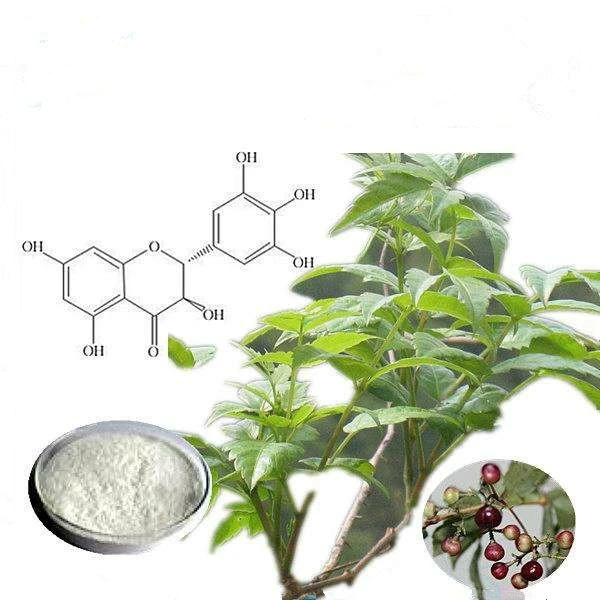
Dihydromyricetin Bulk Powder is primarily derived from plants such as Ampelopsis japonica (commonly known as vine tea or berry tea), and is a polyphenolic active substance. In traditional folk medicine, vine tea is often used for hangover relief, liver protection, and anti-inflammation. Modern research has also found that DHM has potential effects such as antioxidant, anti-inflammatory, and nerve cell protection.
What is the essence of drunkenness?
Drunkenness is not simply "drinking too much," but rather an acute toxic reaction of ethanol and its metabolites (especially acetaldehyde) on the human central nervous system and organs. Typical symptoms include:
- Excitement phase: Increased speech, euphoria (alcohol suppresses the brain's inhibitory control)
- Ataxia phase: Clumsy movements, slurred speech (cerebellar function is affected)
- Stupor phase: Altered consciousness, vomiting, even respiratory depression (high-dose ethanol poisoning)
One of the key intoxicating substances is acetaldehyde. When ethanol is converted to acetaldehyde in the liver by alcohol dehydrogenase (ADH), if the activity of aldehyde dehydrogenase (ALDH2) is insufficient, acetaldehyde accumulates in large quantities, causing symptoms of intoxication such as flushing, dizziness, nausea, and rapid heartbeat.
Mechanism of Action of DHM
Current mainstream scientific research (including animal experiments and a small number of human trials) indicates that DHM cannot truly "prevent" intoxication, that is, it cannot significantly reduce blood alcohol concentration or keep a person sober. Its main effects are concentrated in the following two aspects:
| Mechanism | Specific Effects | Strength of Scientific Evidence |
|---|---|---|
| Enhancement of alcohol-metabolizing enzyme activity | Accelerates the conversion of ethanol → acetaldehyde → acetate, shortening the time alcohol stays in the body | Relatively clear in animal studies; limited human evidence |
| Antagonism of GABAA receptors | Reduces excessive activation of the brain's inhibitory receptors by alcohol, alleviating drowsiness and memory impairment | Relatively well-established at the receptor level |
In simple terms, DHM is more like a symptom reliever rather than an "alcohol antidote" or "drunk-prevention drug."

Key Scientific Facts
DHM Cannot Prevent You from Getting Drunk To more clearly illustrate the limitations and actual effects of DHM, the following table summarizes a comparison between common claims and scientific facts:
| Common Claims / User Expectations | Scientific Research Conclusions | Risk Reminders |
|---|---|---|
| Taking DHM in advance allows you to drink heavily without getting drunk | Blood alcohol concentration still rises with alcohol intake; mental clarity and balance will still be impaired | May encourage users to drink excessively, increasing the risk of alcohol poisoning |
| DHM can completely eliminate drunkenness symptoms | It may improve some post‑drinking dizziness, anxiety, and sleep disturbances, but cannot eliminate ataxia (loss of coordination) or vomiting | Risky behaviors (e.g., driving) may still occur |
| You can recover full sobriety immediately after drinking | The body requires several hours to eliminate alcohol; DHM only plays a supporting role | Cannot replace the body's natural metabolism time |
Key findings: DHM cannot block alcohol absorption or prevent intoxication; it can only alleviate some neurobehavioral damage and accelerate metabolism by about 10%-20% (based on animal data, which may vary significantly when converted to human data).
Suggestions
DHM is not a "miracle drug for preventing hangovers," but rather a "supportive aid for when drunk."
- Suitable Scenarios: Take 30 minutes before drinking alcohol; may help reduce hangover symptoms such as headache and nausea the following day.
- Unsuitable Scenarios: Expecting it to enable safe driving, excessive drinking, or to replace liver metabolism.
- Best Practices: It is still recommended to control alcohol consumption (no more than 25g of pure alcohol per day for men and no more than 15g for women). Dihydromyricetin Bulk Powder should be used as a supplement, not a replacement.
Summary and Safety Reminders
| Question | Answer |
|---|---|
| Can DHM stop you from getting drunk? | No. Getting drunk depends on your blood alcohol concentration. DHM cannot block alcohol absorption or significantly reduce peak alcohol levels. |
| What does DHM actually do? | It may accelerate alcohol metabolism and reduce some central nervous system inhibitory effects, thereby relieving some discomfort of drunkenness and hangover symptoms. |
| Can you rely on DHM to drink large amounts of alcohol? | Absolutely not. The toxicity of alcohol to the liver, pancreas, cardiovascular system, and brain is dose‑dependent. DHM cannot eliminate these toxic effects. |
No "hangover cure product" should ever become an excuse for excessive drinking. Scientific, moderate drinking is the true path to "not getting drunk."
Quality guaranteed, stock ready, place your order now!
My email:sales4@lymallpanda.com
WhatsApp:+86 15353955739